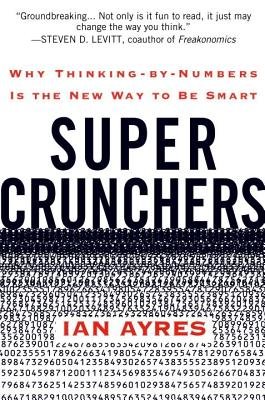
Super Crunchers: Why Thinking-by-Numbers Is the New Way to Be Smart
Ian Ayres's argument that large datasets and regression analysis now beat expert intuition at prediction, made just as statistical decision-making was moving out of the back office.
Ayres builds the case from worked examples. Orley Ashenfelter's weather equation prices Bordeaux vintages before anyone tastes them, and a formula for gestation length outperforms Naegele's rule. Other chapters take up sabermetric scouting, box-office forecasting, randomised A/B testing of advertisements, and the DISTAR teaching method. Two tools run through all of them, multiple regression and the randomised trial. Ayres treats these as the working method of the people he calls super crunchers. He also weighs the costs. An equation that overrules a specialist creates winners and losers, and the same techniques can be turned against the people they are meant to serve. Bantam published it in 2007. The Economist named it a book of the year, and the American Library Association listed it among its Notable Books.
Ayres is an economist and lawyer, the William K. Townsend Professor at Yale Law School and a professor at Yale's School of Management. He edited the Journal of Law, Economics, and Organization for seven years and was elected to the American Academy of Arts and Sciences in 2006. Super Crunchers is the best known of his ten books. It appeared two years after Freakonomics, whose co-author Steven D. Levitt supplied the endorsement printed across the jacket.