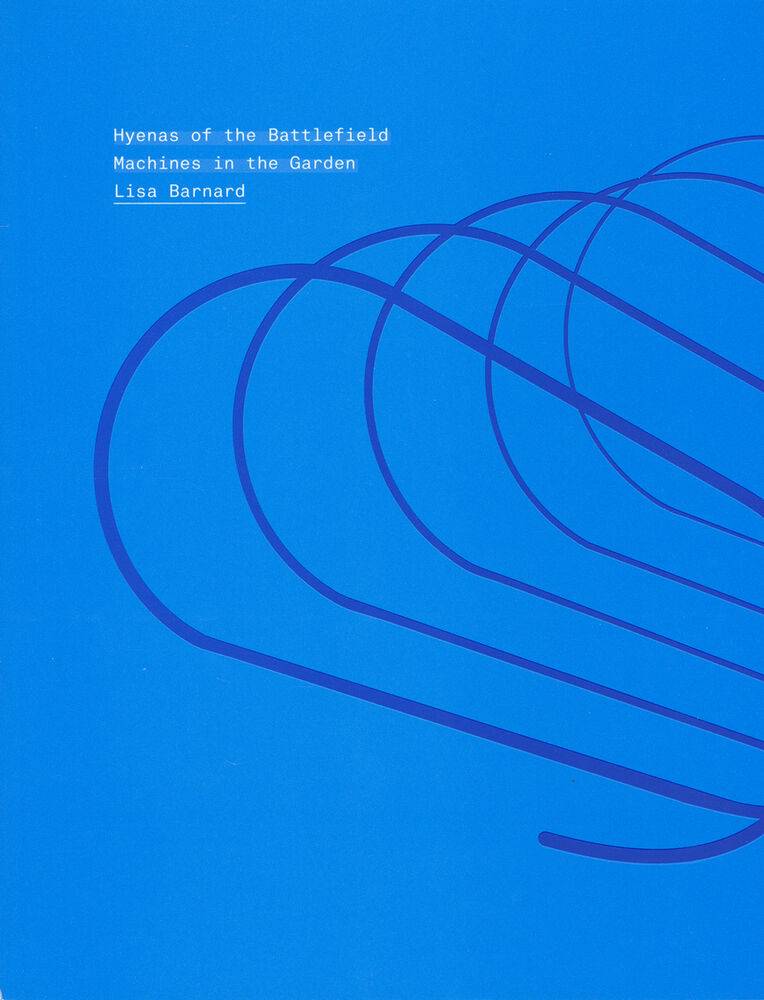
Hyenas of the Battlefield, Machines in the Garden
A study of the alliance between the US military, the entertainment industry and technology, followed through the screens that mediate modern warfare and the landscapes where it is staged and directed.
The book moves from screen to landscape, with images from Las Vegas, Hollywood, Pakistan and Waziristan. It mixes photographs of spent missiles, conference plans and computer-generated images with interviews Barnard recorded with military psychologists and US Air Force pilots. Reviewing it for Photomonitor, Max Vickers notes that the nearest it comes to the war itself is a series of aerial views of Waziristan, Too Thin, Too Blue. The title sets the American pastoral ideal against machine technology, and the hyenas are the corporations that let the US fight without putting soldiers on the ground. Essays by Julian Stallabrass and Eugénie Shinkle. GOST published it in January 2015.
Barnard is a photographic artist based in Lewes, East Sussex. Barnard won the Albert Renger-Patzsch European Book Award in 2012 and was shortlisted for the Arles New Discovery Award in 2015. This is Barnard's second monograph, after Chateau Despair, published by GOST in 2013 and photographed inside the abandoned Conservative Party headquarters in London.