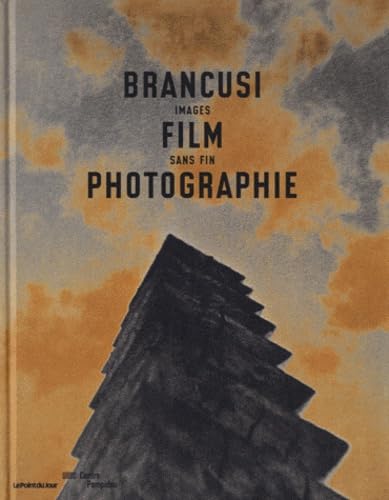
Brancusi, film, photographie: images sans fin
The catalogue of Images sans fin at the Centre Pompidou in 2011. It was the first exhibition to show Constantin Brancusi’s photographs and films as work in their own right, not as documentation of the sculpture.
Brancusi began photographing his sculptures in the studio in the early 1920s, on Man Ray’s advice. Then he began filming them. He kept at both for the rest of his working life and let almost none of it out. Around a hundred photographs and film stills are gathered here, many published for the first time: sculptures in raking light and steam, the Impasse Ronsin studio rearranged from shot to shot, models and friends, self-portraits, studies of stone and plaster, photograms. The plates are printed in four colour, so the varying tones of the original black-and-white prints survive reproduction. Three essays follow: on reproduction, on Brancusi’s use of cinema, and on the exchange with Man Ray. Alfred Pacquement contributes the preface. Quentin Bajac, Clément Chéroux and Philippe-Alain Michaud, all curators at the Pompidou, edited the volume. Text in French.
Brancusi (1876–1957) left Romania for Paris in 1904, much of the way on foot, and stayed. He printed the photographs himself and, by any technical standard, printed them badly: out of focus, over-exposed, shot into the light, the edges burned. That was the point. He wanted the sculpture seen as he saw it in the studio, and he would not hand that job to anyone else. The photographs ended up part of the work.