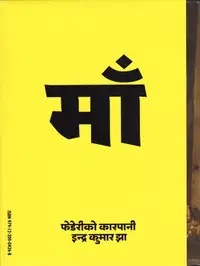
MAA
MAA documents the funeral rituals of Manikarnika, the cremation ground on the Ganges in Varanasi, alongside the everyday life that surrounds it, drawn from roughly ten thousand photographs made over several years by local photographer Indra Kumar Jha, one of the few photographers the community permits to document the cremations.
The book's design runs two sequences at once through folded pages: the outer face of each spread presents a stream of 108 headshots, living and dead, a tribute to the goddess Kali's garland of 108 slain heads, while the inner pages hold everyday scenes from Manikarnika. Federico Carpani, an Italian photographer, met Jha by chance near the cremation ground and edited and designed the book from his archive; it was self-published in Bologna in an edition of 500, softcover with an exposed spine and gatefold construction throughout. The title is the word used across India both for one's own mother and for the various forms of the goddess.
Carpani is an Italian photographer and editor associated with Skinnerboox; MAA was recognized by the Anamorphosis Prize for its unusual cross-cultural authorship, pairing an outsider's editorial eye with an insider's decade of access.