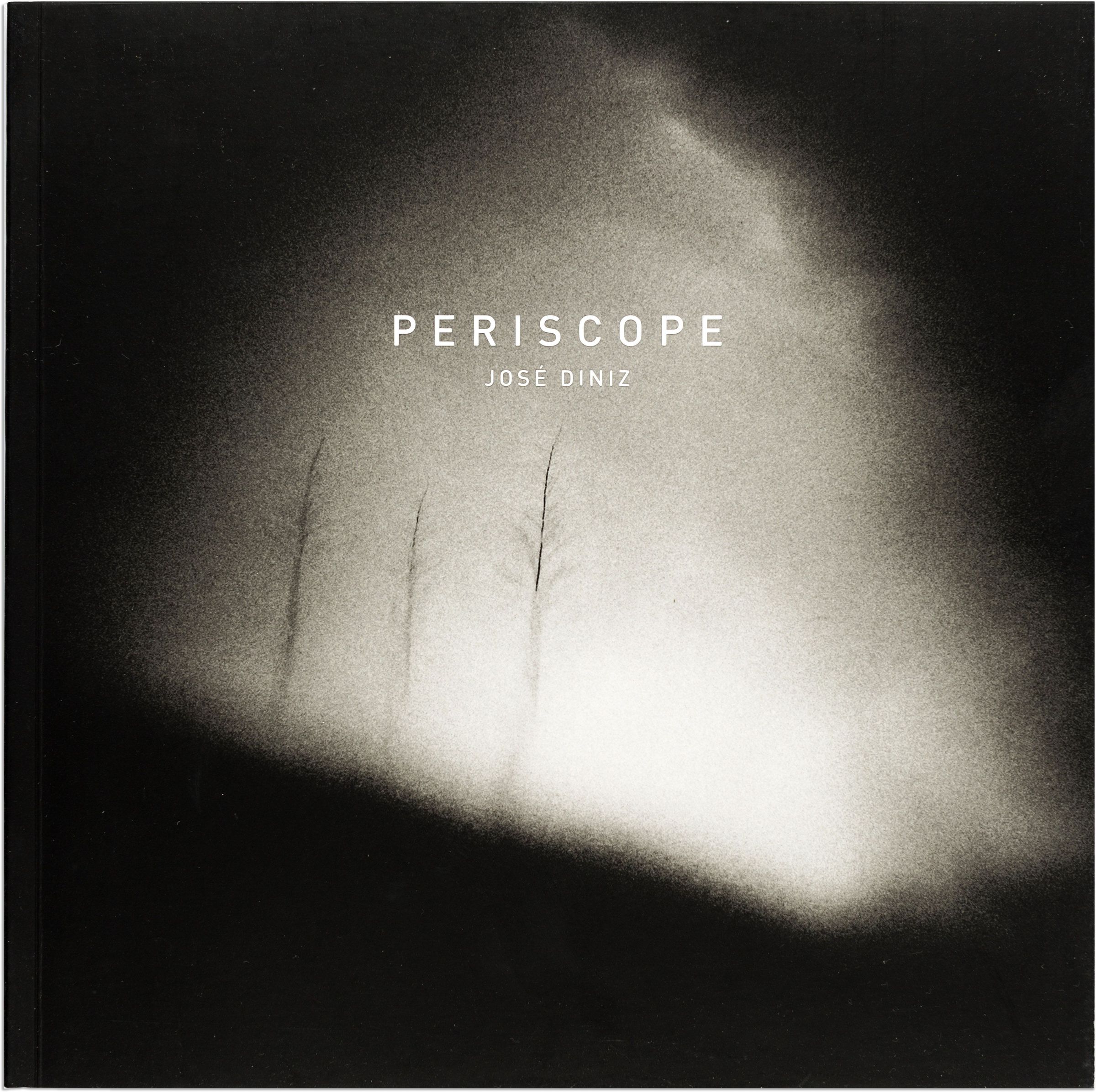
Periscope
Over eight years, José Diniz traced the Brazilian coastline from Maranhão to Rio Grande do Sul and into Uruguay, photographing people, buildings, and the horizon always from the same low, water-level vantage: face-on, beneath, or above the waves.
Periscope collects 54 black-and-white images from that project across 74 pages. Despite the title, Diniz never used an actual periscope; as he has put it, the name is "just a metaphor for the way of observing I chose — it's as if my eyes weren't enough to see and photograph under those conditions." Working with the camera held below the horizon line, waves reading as moving mountains and the water itself bending the optics into new readings of the scene, Diniz built a body of work that treats the shoreline as a threshold rather than a backdrop. Editor Iatã Cannabrava describes the sequence as a narrative told by an innocent periscope that surfaces from the depths to find humanity endangering the planet itself, closing on an image of water symbolically flooding Rio de Janeiro's Copacabana Palace.
Published by Editora Madalena with Editora Terceiro Nome in a signed edition of 900 softcover copies wrapped in a clear plastic cover, designed by Ekaterina Kholmogorova and printed in Brazil by IPSIS, Periscope was Diniz's first book. It launched in São Paulo in September 2014, at the Museu de Arte Contemporânea in Niterói that November, and again at Paris Photo's Grand Palais signing program the same year. Diniz (b. 1954, Niterói) is the grandson of a founder of the Sociedade Fluminense de Fotografia and the son of painter José Maria Nogueira Diniz, from whom he inherited both his fascination with marine imagery and his path toward studying at Rio's Museu de Arte Moderna.