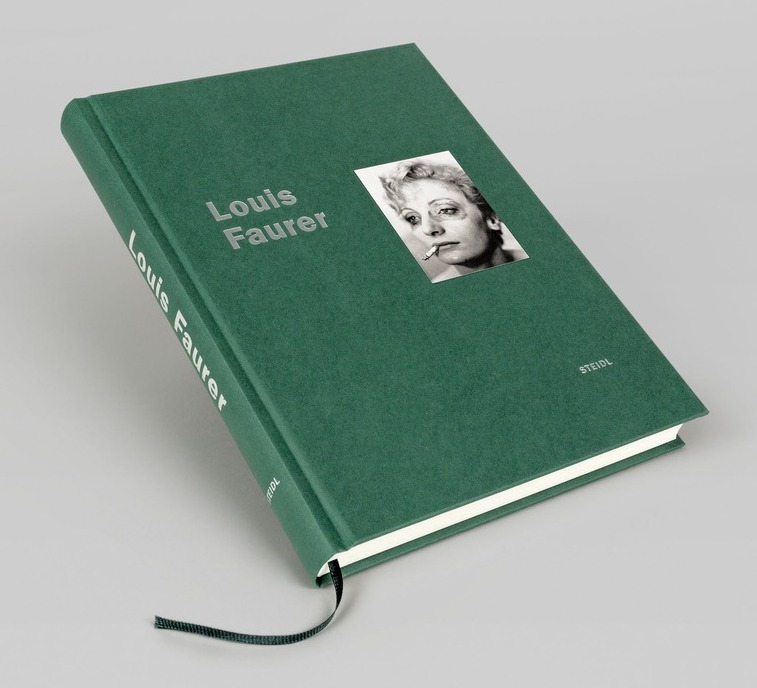
Louis Faurer
Louis Faurer is the first monograph in fifteen years devoted to a photographer whose darkly romantic pictures of 1940s and '50s New York have long been overshadowed by the better-known work of his contemporaries.
Working first for fashion magazines like Harper's Bazaar before turning his camera on Times Square and the streets around it, Faurer built an empathetic, ironic body of street photography full of graphic contrasts, reflections and distortions borrowed from film noir. The book gathers roughly one hundred plates across 208 pages in a green linen hardcover with a tipped-in portrait on the cover, published by Steidl with the Fondation Henri Cartier-Bresson, Paris, in 2016, with an introduction by Agnès Sire and texts by Walter Hopps and Susan Kismaric.
Faurer (1916–2001) worked alongside Robert Frank in New York in the early 1950s and drew on Walker Evans before him, developing a sensibility for marginal figures and emotional ambiguity that Walter Hopps recognized as the work of, in his words, a master of the medium. Long under-recognized relative to Frank and Evans, Faurer's reputation has grown steadily through retrospectives like this one.