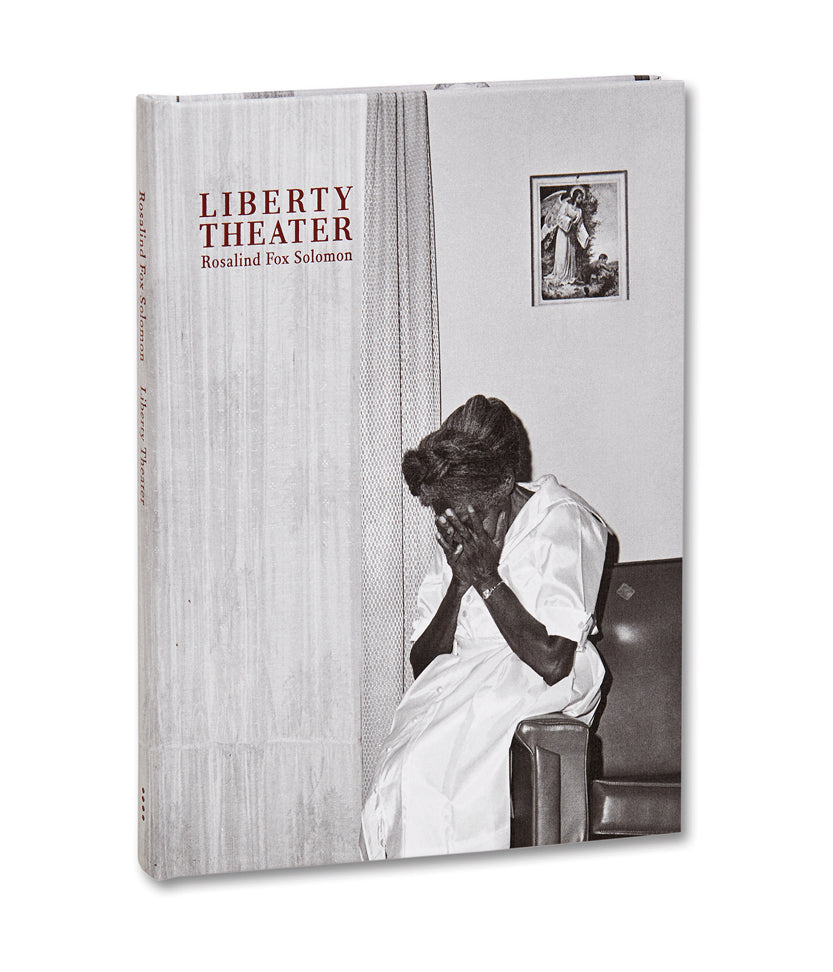
Liberty Theater
A photographic survey of race, class and religious life across the American South, made by Rosalind Fox Solomon between the 1970s and 1990s. It is named for the segregation-era cinema in Chattanooga, Tennessee, the only theater in the city open to Black patrons until the Civil Rights Act.
Solomon began the project at the Scottsboro courthouse in Alabama, site of the notorious 1931 trial, photographing a monthly market held on its grounds. She then extended her travels through Georgia, Florida, Louisiana, Mississippi and South Carolina. The 77 tritone photographs move between churches, funerals, family gatherings, roadside markets and domestic interiors. They track how the legacies of segregation persisted in gesture, dress and social space long after the legal changes of the 1960s. Published by MACK in 2018 as a 96-page debossed hardback, the book carries an essay by the writer and photographer Stanley Wolukau-Wanambwa.
Solomon (1930-2020) came to photography in her forties, studying briefly with Lisette Model. She spent five decades photographing ritual, the body and mortality in the United States and abroad; her other MACK monographs include THEM, Got to Go and A Woman I Once Knew. Liberty Theater is her principal treatment of the American South and one of her most substantial single-subject monographs, distinct from the library's Nazraeli Press one-picture-book Witness, a small limited-edition item built around a single tipped-in photograph.