Roy Lichtenstein: Like New
The catalogue of the Whitney Museum's 2026–27 Lichtenstein retrospective, the first in New York since 1993, which argues that he understood, decades before the internet, that images get copied, altered and passed around until nobody owns them.
Meg Onli and the artist Alex Da Corte curated the show and the book, titled after a 1962 drawing. The argument turns on Image Duplicator (1963), which the checklist sets under a heading of its own. It is a tight close-up of a helmeted villain, lifted from a Jack Kirby panel in the first issue of X-Men. The balloon reads What? Why did you ask that? What do you know about my image duplicator?
The machine the villain guards is Lichtenstein himself. His paintings looked printed and were made by hand. Their pictures came from comic books, advertising and other painters. The show follows that question of authorship across six decades and ends with Louise Lawler, Richard Pettibone and Sturtevant, who took Lichtenstein as their source the way he had taken Kirby.
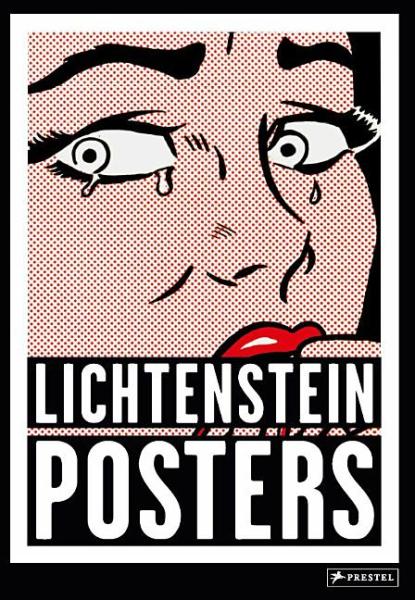
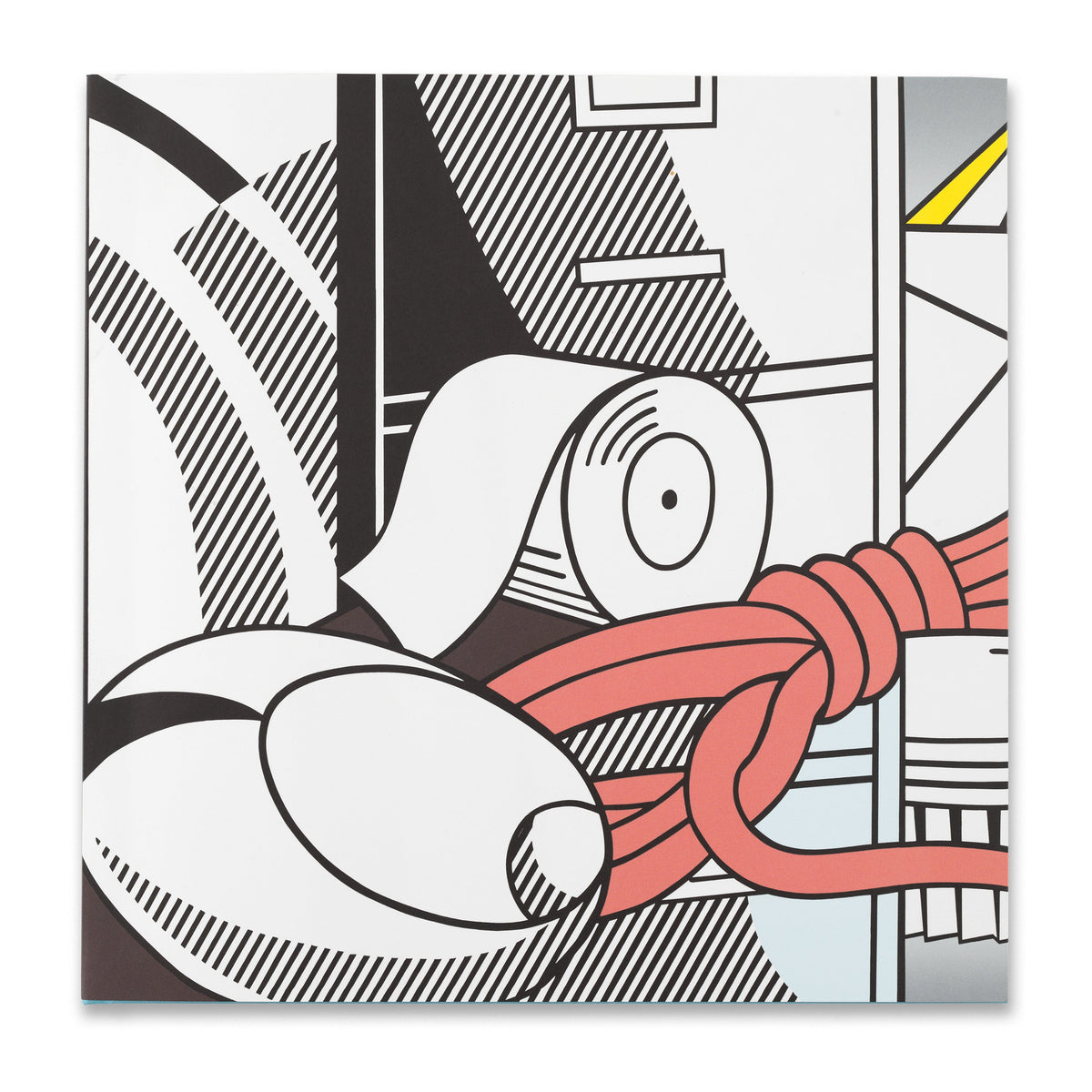
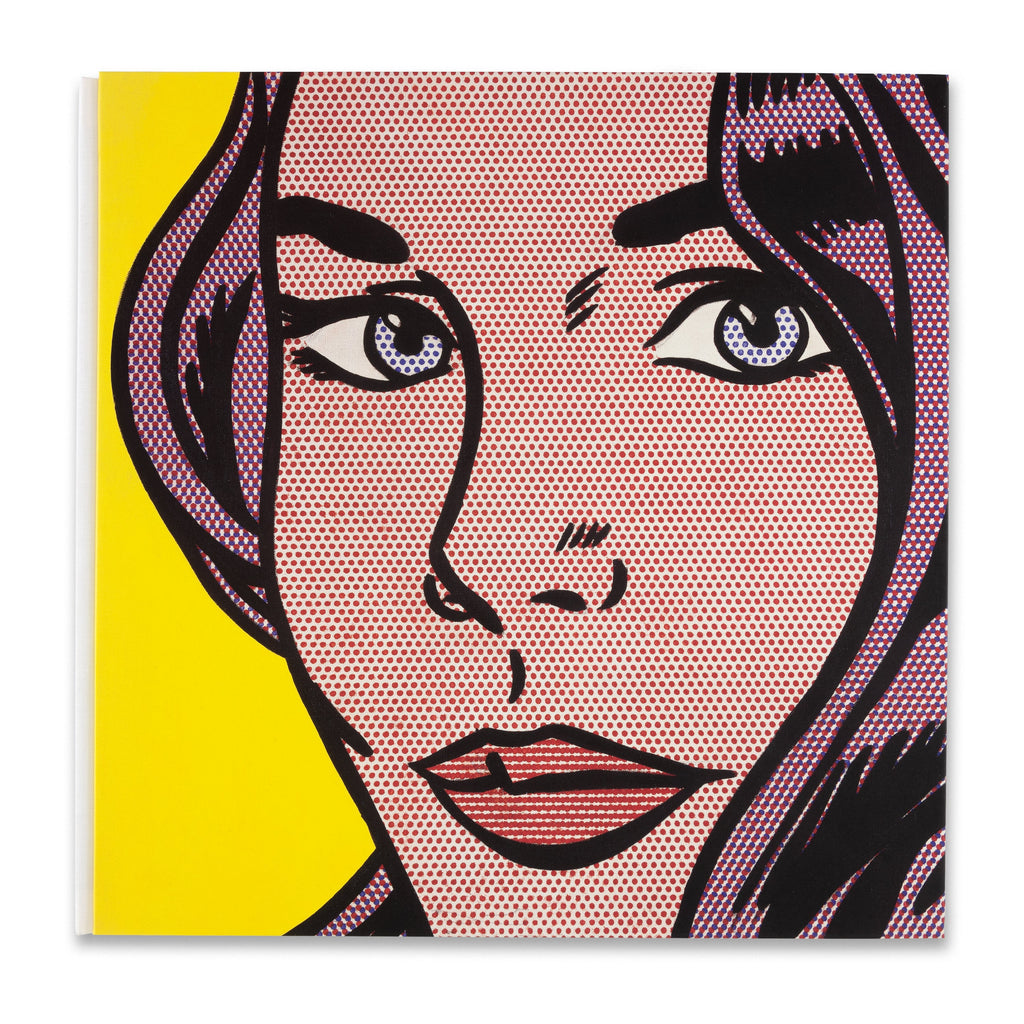
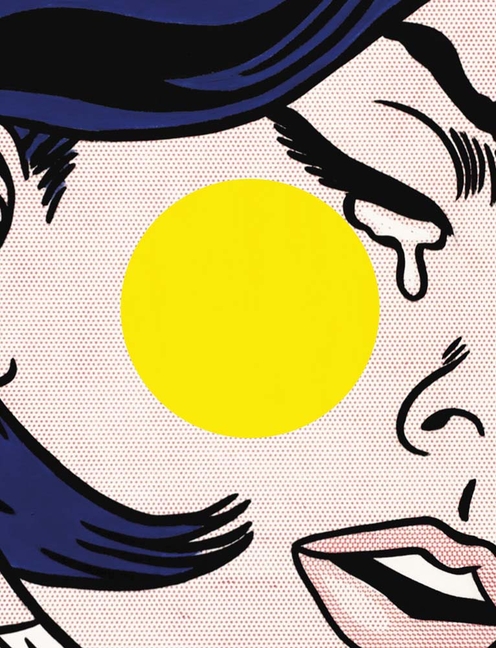
The book runs from Ohio State in the 1940s to his death in 1997 and sets chronology aside. It pairs finished paintings with preparatory drawings, source materials and rarely seen early work. Texts are by Da Corte, Onli, Dan Nadel, Marshall N. Price and Carmen Winant. Irma Boom designed it. She cuts a circle through the jacket to the yellow board beneath and repeats the device inside: die-cut pages run through the book, each opening giving a view onto both facing pages. Lichtenstein's notebooks are reproduced as chapters of their own, printed on a different, vellum-like stock. The jacket was issued in two versions, one with Drowning Girl and one with Little Big Painting. A gatefold reproduces the Greene Street Mural. 366 pages, hardcover, published by the Whitney and distributed by Yale University Press. The exhibition runs 11 October 2026 to 10 May 2027.
The library puts Lichtenstein beside Marshall McLuhan. They were working on the same idea at the same time, that a medium changes whatever it carries, McLuhan in print and Lichtenstein in paint. Lichtenstein went further than most artists would. He called himself the image duplicator and erased himself as the author. The library's copy has the Drowning Girl jacket. It considers the book's making exemplary: the format, the die cuts throughout, the notebooks on their own paper, the essay and the layouts.