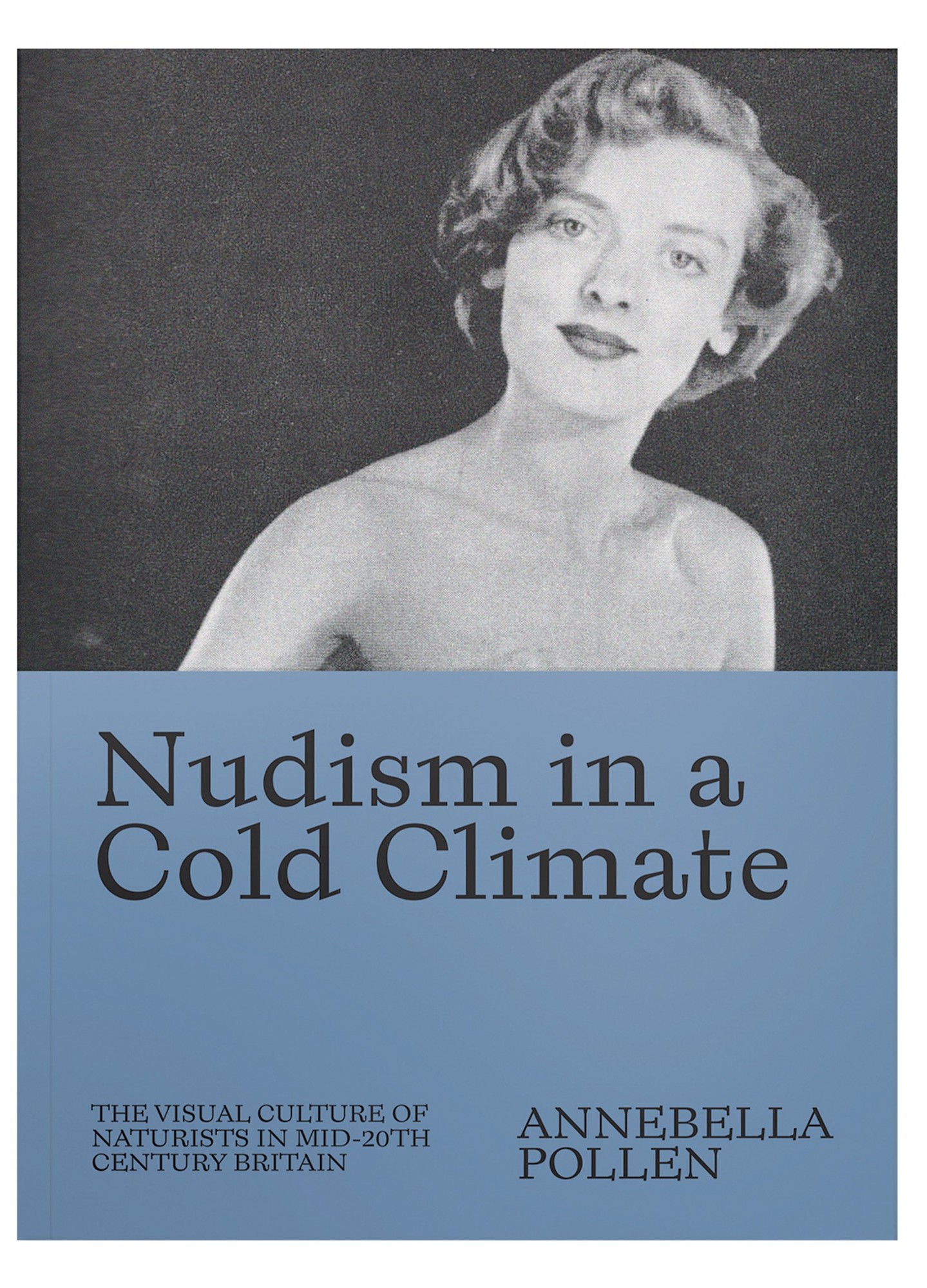
Nudism in a Cold Climate
A cultural history that treats naturist photography as a serious archive, not a curiosity. It tracks how a marginal social movement built and defended itself through the images it chose to publish.
The book draws on club magazines, private photo albums, and the visual propaganda of British naturist organizations. It follows the movement from its 1920s roots alongside vegetarianism and utopian health reform, through postwar growth as an organized club culture, to its shift under 1960s sexual liberalization. Pollen reads the recurring photographs of members at camps and outings as the movement's chief public-relations tool. Those images built membership. They also brought scandal. Pollen uses that tension to trace wider shifts in Britain's attitudes toward bodies, health, gender, and censorship.
Pollen is Reader in History of Art and Design at the University of Brighton. Her research centers on amateur photography, dress, and twentieth-century British subcultures. Her earlier books cover 1920s craft utopianism and the Kibbo Kift movement.