N.A.
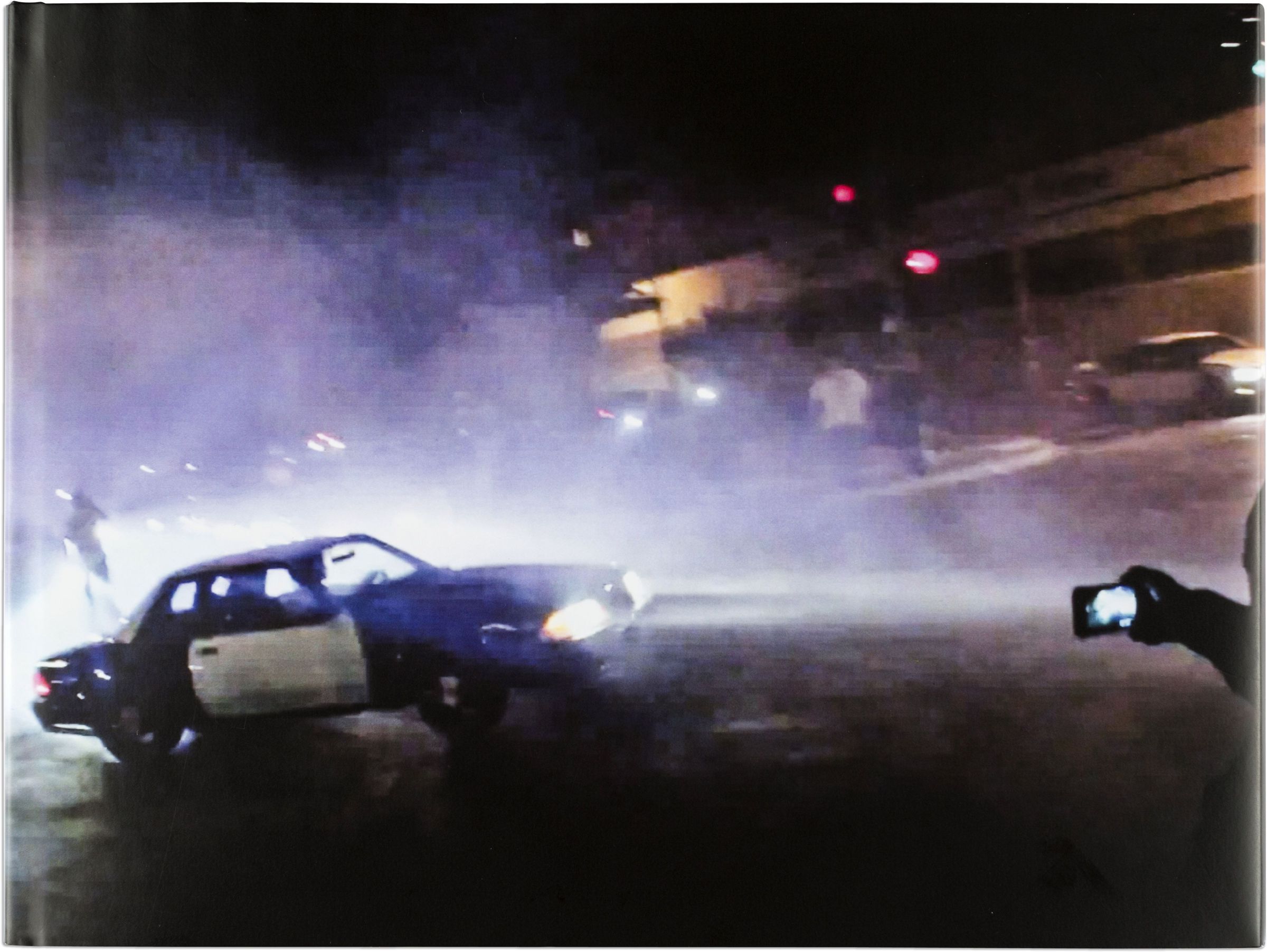
Doug Rickard's N.A. gathers still frames pulled from YouTube videos uploaded by ordinary Americans, assembling a jittery, unauthorized portrait of the country's urban underbelly.
Over roughly three years, Rickard combed through amateur cellphone footage, pausing and advancing frame by frame to extract images from what he has described as hijacking other people's own devices to give him "very special views and intimate situations" — scenes ranging from petty crime and comic mishap to moments of unguarded intimacy, none of it staged or consented to as photography. The 128-page hardcover, published by D.A.P. with Verlag Kettler in 2014 (following a smaller 2013 edition from Cologne's White Press), reproduces 96 color images alongside text by Z. Redman and a poem by Ann Garlid. The title deliberately resists a single reading: Rickard has said it stands variously for "National Anthem," the bureaucratic "Not Applicable," or simply "North America."
N.A. extends the found-image, appropriation-based method Rickard developed in A New American Picture (2010), his acclaimed series built from Google Street View captures, into an even more intimate and unstable source: footage its subjects filmed and posted themselves, then repurposed without their knowledge into a document of race, technology, and a culture under constant, casual self-surveillance.