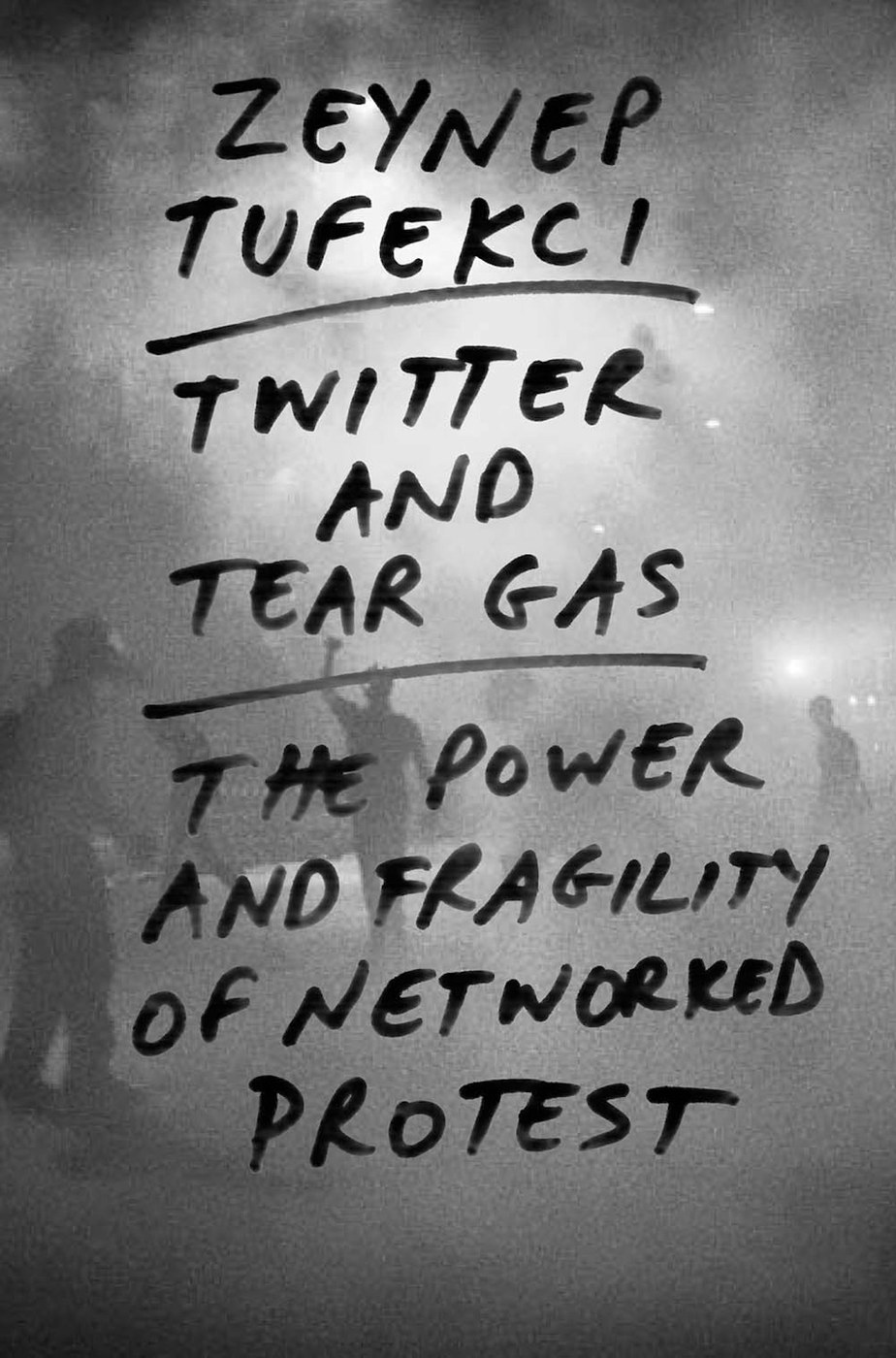
Twitter and Tear Gas: The Power and Fragility of Networked Protest
The sociologist Zeynep Tufekci's account of how the internet changed protest, drawn from a decade inside the movements it describes, from Tahrir Square to Occupy to Gezi Park.
Her argument is that a networked movement can reach in days the scale the civil rights movement needed years to build, and that the shortcut has a cost. The 1963 March on Washington was the product of months of organising, and that work left behind an organisation able to make decisions and negotiate. A hashtag can fill a square without producing either, so the new movements stall at the moment a state adapts to them. Tufekci calls this the tactical freeze. She traces it through the Zapatistas' early use of the internet, the medical supply lines run over Twitter during the Arab Spring, Occupy's human microphone, and the tear gas in Istanbul in 2013, where she was present. Later chapters follow the governments' reply: flood the channel with confusion rather than censor it. Yale published the book in May 2017 and released the full text free online under a Creative Commons licence.
Tufekci grew up in Istanbul in the years after the 1980 military coup, worked as a programmer before turning to sociology, and taught at the University of North Carolina when the book appeared. She has since moved to Princeton and writes an opinion column for The New York Times. This is her first book.