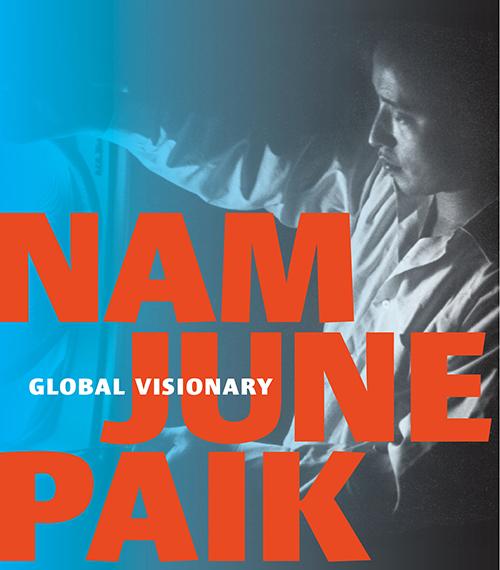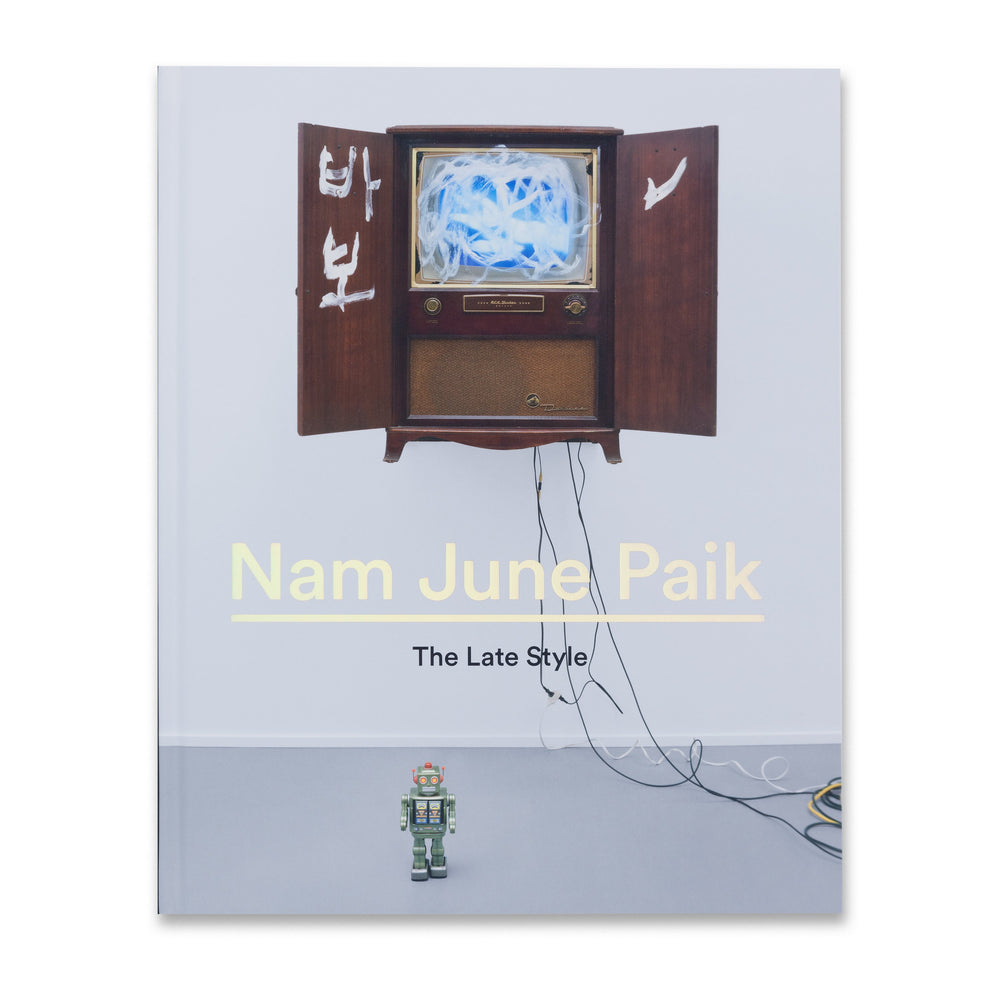
Nam June Paik: The Late Style
A sustained look at the decade of Nam June Paik's work that scholarship had largely stopped watching for, when the founder of video art was still building battered television cabinets, laser projections and toy robots into a recognisably late idiom.
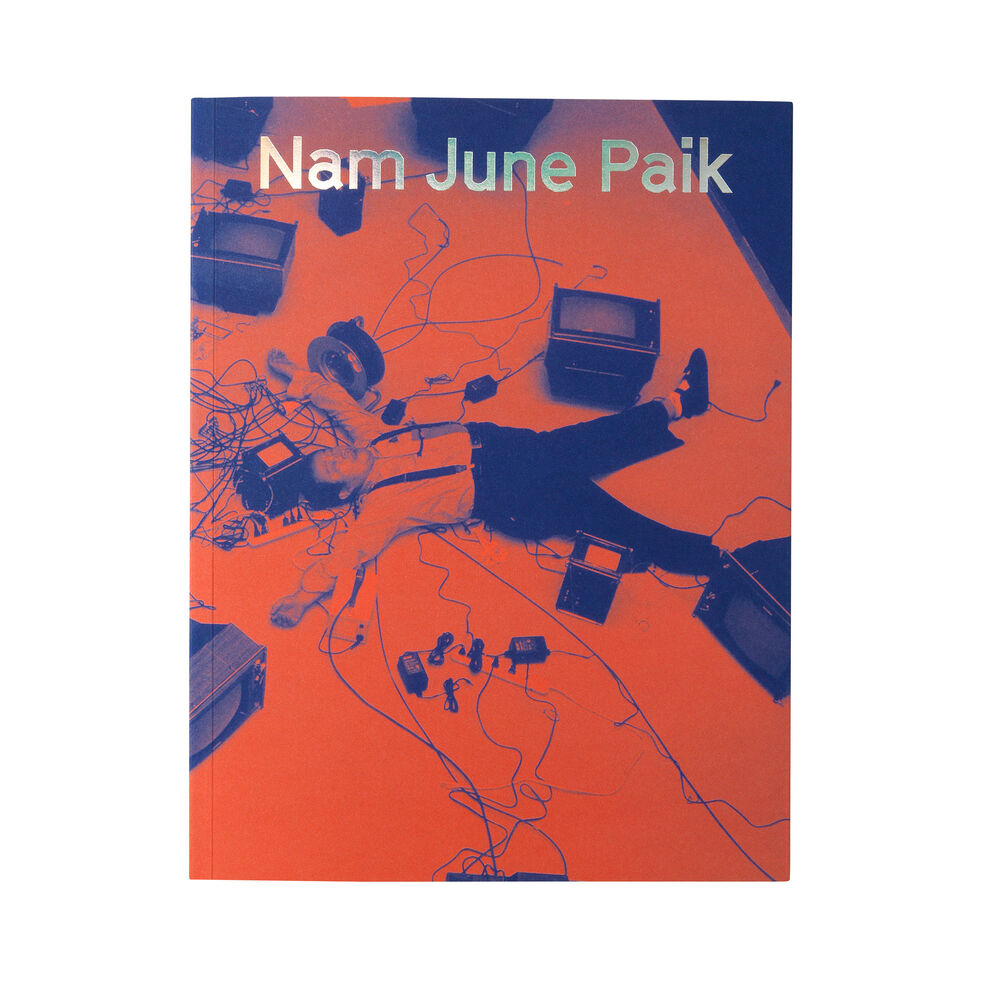
Published on the occasion of Nam June Paik: The Late Style at Gagosian Hong Kong, 17 September to 7 November 2015. It was the first exhibition of Paik's work in the city, and the first mounted after the gallery took on the representation of his estate. John G. Hanhardt, who organised Paik surveys at the Whitney Museum of American Art and the Smithsonian American Art Museum, supplies the catalogue essay. The bilingual English and Chinese volume reproduces video sculptures, paintings and drawings from Paik's final years, many never previously exhibited, alongside anchoring works from the 1960s through the 1980s, and closes with an exhibition history, a bibliography and a facsimile of one of the artist's notebooks from 1984. Designed by Goto Design, New York.
Paik (1932–2006) was born in Seoul, trained in music and aesthetics in Tokyo and Germany, and made his name in the Fluxus circle before turning the television set into an artist's material. His work runs from the prepared-TV experiments of the 1960s to the satellite broadcasts Good Morning, Mr. Orwell and Wrap Around the World.