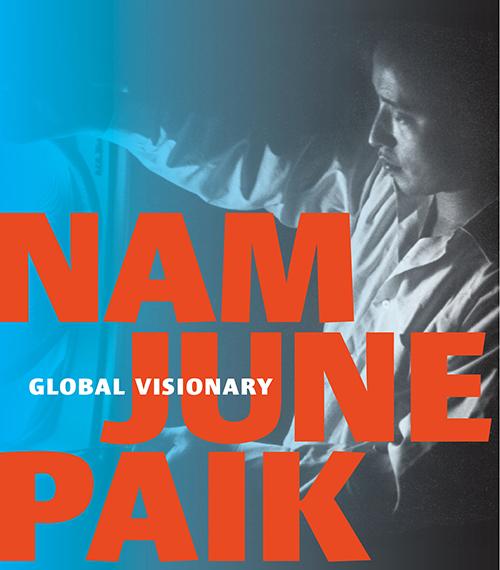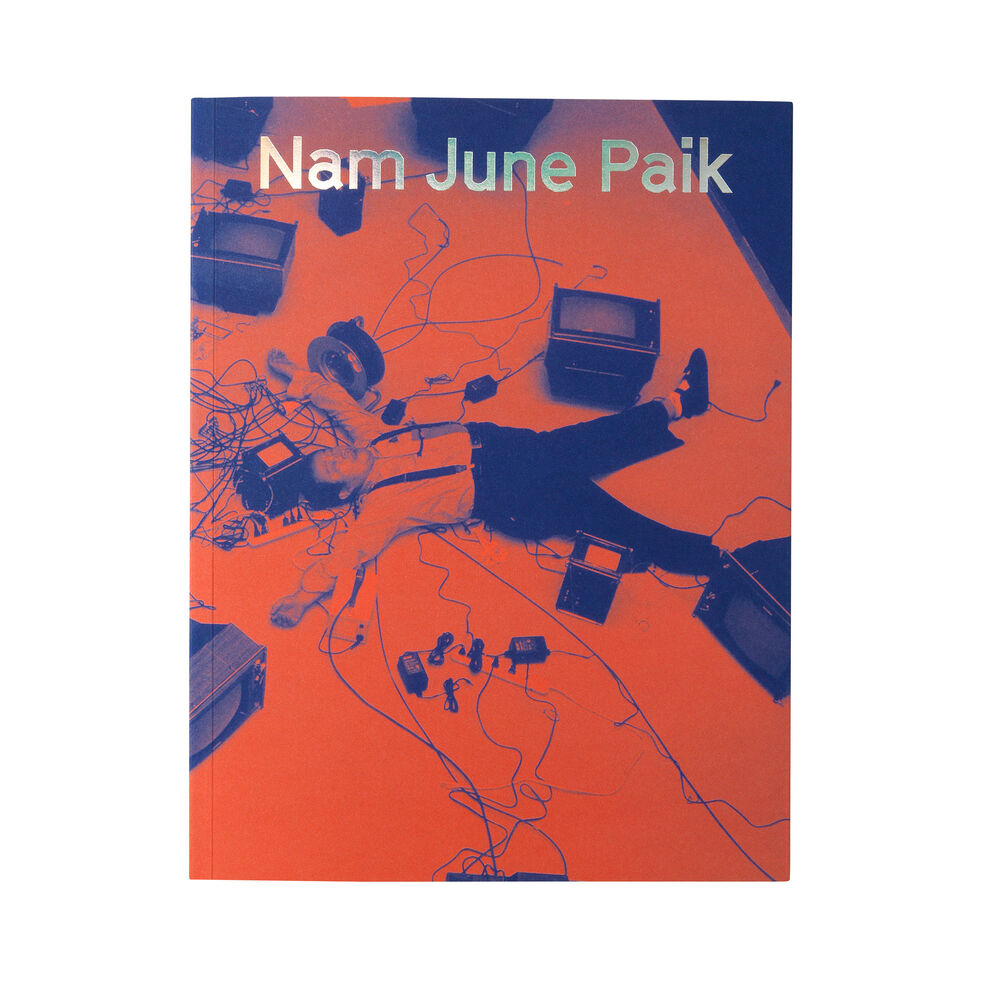
Nam June Paik
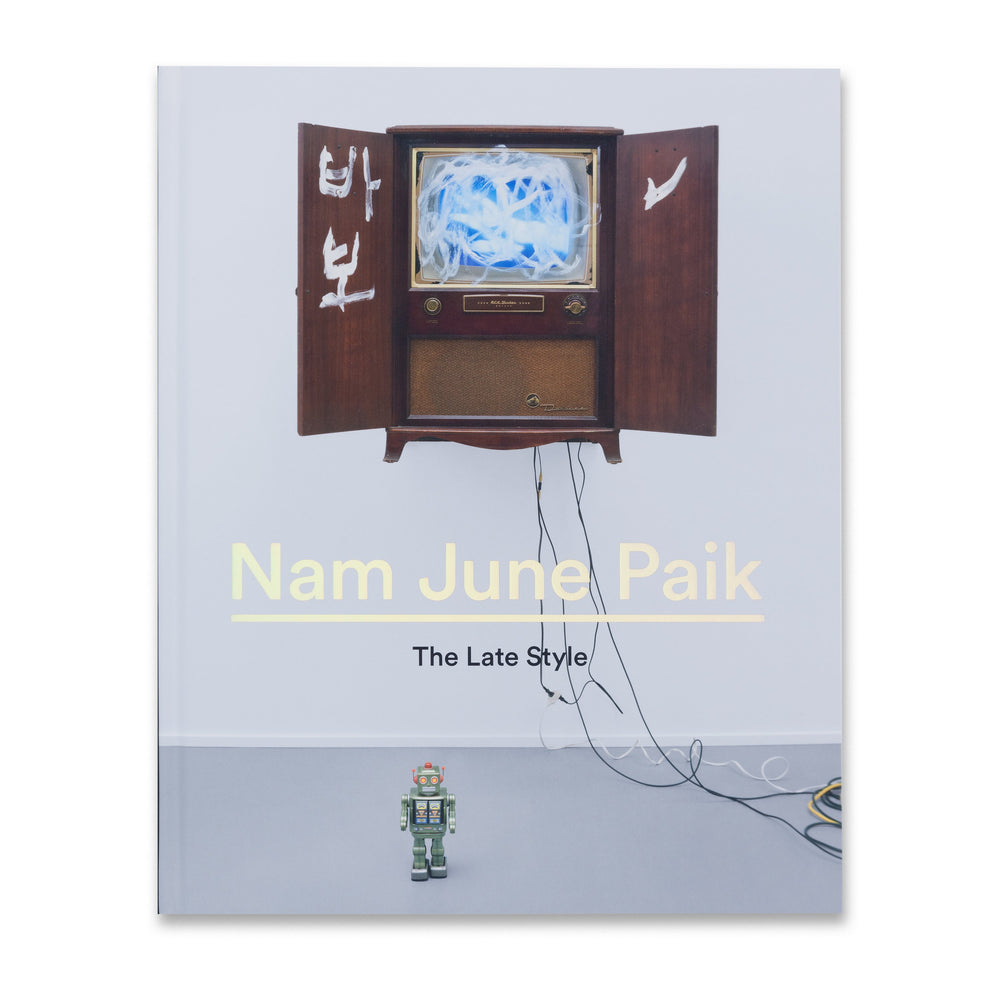
The catalogue for the first full-scale reassessment of Nam June Paik in a generation, and the book that recast him not as a technologist but as a transnational artist whose Eurasian imagination anticipated the borders and networks we now argue about.
Published for the retrospective organised by Tate Modern and the San Francisco Museum of Modern Art, which opened at Tate Modern in October 2019 and travelled to the Stedelijk Museum, Amsterdam, SFMOMA and National Gallery Singapore. Edited by Sook-Kyung Lee and Rudolf Frieling, who curated the exhibition with Andrea Nitsche-Krupp, the 176-page volume gathers essays by curators from the four venues alongside a text by the musician and writer David Toop, roughly 150 illustrations, archival material and excerpts from Paik's own writings. The exhibition assembled over two hundred works across five decades — early Fluxus performance scores, prepared televisions, robots, room-scale video walls and satellite broadcasts — and the essays read his concepts of "Eurasia" and the "Electronic Superhighway" through transnationalism rather than through the history of technology.
Paik (1932–2006) worked between Seoul, Tokyo, Cologne and New York, and collaborated across his career with John Cage, Merce Cunningham, Joseph Beuys and the cellist Charlotte Moorman.